
 Photoshop
 Maya
Maya ZBrush
 Houdini
 Substance Painter
 Blender
 Unreal Engine
 Arnold
 Nuke
Nuke KeyShot
 V-Ray
V-Ray Marmoset Toolbag
 Mari
Mari Marvelous Designer
 Substance Designer
 3ds Max
 3DCoat
 Redshift
 Faceform Wrap
 Lightroom
 After Effects
 OctaneRender
 SpeedTree
 Daz 3D
 Agisoft Metashape
 Fusion
 Modo
Modo RealityCapture
 Gaea
Gaea Cinema 4D
 Gravity Sketch
 Premiere
 Procreate
 Clip Studio Paint
 SketchUp
 SketchBook
 Katana
 Natron
 Mudbox
 Quixel Bridge
 Quixel Megascans
 Quixel Mixer
 Substance 3D Modeler
 World Creator
 Yeti
Yeti Ziva VFX
 Mixamo
 Adobe Medium
 Quixel DDO
 xNormal
 Meshmixer
 Storyboard Pro
 DaVinci Resolve
 TreeIt
 World Machine
 Gaffer
 Corel Painter
 SynthEyes
 Krita
Krita Massive
 Materialize
 Unity
Unity Ornatrix
 PreForm
 Moi 3D
 animBot
 QuickTime
 ReCap
ReCap









21 Lessons
In the first lesson of the workshop, Jerad Marantz explains why successful creature design requires anatomical knowledge and real-world references. To create believable, original creatures, artists must learn to analyze briefs, build comprehensive references, and design from the skeleton outward. The key is grounding fantastical designs in biological reality while combining elements from multiple sources to achieve something that audiences haven't seen before.
Duration: 15m 28s

This lesson focuses on exploration within the creature design process, showing how rapid iteration through small, decisive sketches generates more creative options than laboring over a single detailed drawing. Jerad’s philosophy centers on grounding imaginative designs in real-world reference while maintaining flexibility for creative discovery later in production.
Duration: 49m 34s

This lesson demonstrates that creature design in ZBrush relies on a disciplined workflow. By limiting brushes, starting with low resolution, and grounding designs in anatomical reality, artists can create believable creatures. DynaMesh revolutionizes the sculpting process by providing clay-like freedom to make changes at any stage, encouraging experimentation while maintaining the fundamental principle that all design choices should serve the creature's function and role in the story.
Duration: 46m 58s

This lesson demonstrates why ZSpheres provide a great foundation for creating complex character models in ZBrush, offering artists control over proportions and form during the blocking phase. By establishing proper topology early and using a low-to-high resolution workflow, artists can achieve cleaner, more professional results. This workflow guarantees that the geometry flows correctly and supports manipulation throughout all stages of character development.
Duration: 20m 43s

This lesson demonstrates how, by maximizing what can be achieved with low-polygon geometry and basic tools, artists can establish strong forms more quickly and cleanly. This approach makes workflow more efficient and provides more artistic control, making it possible to make significant progress before moving to a higher polygon count or advanced detailing.
Duration: 10m 51s

This lesson demonstrates that spending significant time at low subdivision levels creates a stronger foundation with clear forms. By resisting the temptation to add resolution, instead maximizing what can be achieved with limited geometry, artists can create models that feel structured and anatomically grounded rather than gooey and shapeless, making the next stages of the sculpting process more successful.
Duration: 15m 36s

This lesson demonstrates that successful creature design requires balancing artistic freedom with anatomical logic. While DynaMesh enables exploratory sculpting without technical constraints, artists must keep in mind whether forms are believable and functional. The main point is knowing anatomy well enough to manipulate it, ensuring that even the strangest creatures feel like they could actually exist and move in their world.
Duration: 33m 32s

In this lesson, Jerad demonstrates that by controlling mesh density through PolyPaint and projecting details across subdivision levels, artists can create a model that balances detail with the flexibility to make changes if needed. This approach allows for both high-resolution detailing in focal areas like the creature's head while maintaining efficient, workable geometry in the body and limbs.
Duration: 14m 38s

This lesson demonstrates a professional creature design workflow that bridges creative sculpting with real-world production requirements. Marantz demonstrates how thoughtful organization, strategic tool selection, and an understanding of downstream processes result in efficient, high-quality creature designs.
Duration: 29m 47s

This lesson covers UV mapping: an essential technical step between modeling and texturing that ensures that painted details display correctly. ZBrush's UV Master tool makes this complex process easier, handling most calculations automatically while still allowing artists to verify quality through seam checking. With the UVs set up, the model is now ready for painting.
Duration: 4m 42s

This lesson covers PolyPainting, using a layered process that balances technical knowledge with artistic observation of nature. By planning color schemes, working gradually across the entire model, and thoughtfully applying detail that complements the design’s complexity, artists can create believable organic creatures.
Duration: 29m 40s

This lesson demonstrates how DynaMesh and ZBrush’s masking tools provide tremendous creative freedom for building organic environmental bases for sculpts. Working on the base offers a refreshing break from character sculpting, allowing for experimentation and happy accidents. Jerad demonstrates efficient workflows that can be applied to both organic environments and hard-surface modeling, combining various brushes, masking techniques, and material substitution.
Duration: 6m 13s

This lesson focuses on character posing. Effective positing requires an approach that balances technical precision with artistic vision. By working non-destructively with layers, making adjustments at low subdivision levels, and constantly evaluating the pose from different angles, artists can create dynamic, anatomically correct poses that bring their creatures to life. Every aspect of the pose must serve a purpose in communicating the character's nature and capabilities.
Duration: 15m 8s

This lesson demonstrates an efficient approach to lighting and rendering in ZBrush, maintaining flexibility when refining the results during post-production. By testing lighting at lower quality settings, creating multiple render passes, and leveraging Photoshop's layer-masking capabilities, artists can quickly experiment on presentation-ready images. This combination of ZBrush's rendering capabilities and Photoshop compositing provides a powerful pipeline for both concept design development and client presentations.
Duration: 14m 39s

This lesson covers creating turntable animations in ZBrush. The key is to test angles without rendering, then enable BPR for the final high-quality output. This produces a client-ready presentation that showcases a 3D model from all angles. Multiple turntable passes can also be combined into a single movie file for a clearer model review.
Duration: 5m 28s

This lesson demonstrates why KeyShot provides a powerful rendering solution for ZBrush sculptors, offering an intuitive material system and real-time feedback. By exporting a sculpt from ZBrush and setting up procedural textures, bump maps, and HDRI lighting inside KeyShot, artists can create professional-quality renders without extensive post-processing.
Duration: 18m 31s

This lesson covers creating a professional turntable animation in KeyShot. The process requires careful planning and patience, especially when working with complex materials like translucent skin. While the setup process is straightforward, rendering can take a considerable amount of time.
Duration: 6m 41s

This lesson demonstrates a multi-pass rendering strategy, providing maximum control during compositing. Creating individual renders for masking, lighting, and to control specularity offers more flexibility when refining the image in Photoshop, providing precise control over lighting, material properties and visual emphasis.
Duration: 9m 14s

This lesson explores how to refine the image in Photoshop. By capturing multiple material passes during rendering, and by understanding Photoshop's layer blending modes and adjustment tools, artists can dramatically enhance their creature designs while working within the confines of the original render. The key is to work aggressively with effects and adjustments, then dial back the opacity to create natural-looking results that enhance rather than replace the foundational 3D work.
Duration: 18m 55s

Building on the previous lesson, this lesson demonstrates how strategic planning and layer management can dramatically improve the look of the creature. By resolving one detailed view first, artists can then apply the same techniques across multiple angles and poses, making adjustments for accuracy and composition. This approach balances efficiency with quality, allowing artists to maintain visual consistency across all views.
Duration: 4m 50s

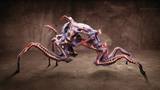
The final lesson of the workshop reinforces the idea that while an understanding of modern tools like ZBrush and Photoshop is helpful, an artistic foundation is what determines whether concept art is successful. Jerad explains that careers in concept art are uniquely flexible, and that artists can shape their career trajectory through portfolio development, and should prioritize continuous learning, surrounding themselves with talented peers. The completed Alien Rock Grubber project demonstrates a complete professional pipeline, from sketch to final presentation-ready renders.
Duration: 8m 12s

Primary tools
For this workshop you’ll need:
Skills Covered
Who’s this Workshop for?
This workshop is designed for intermediate to advanced digital artists, concept artists, and creature designers seeking to explore a range of creature design techniques. Jerad Marantz's training is especially valuable for professionals in the entertainment industry aiming to elevate their creature design skills using industry-standard workflows.
Students pursuing careers in digital art, as well as established artists expanding into creature design, will also benefit from this workshop. Jerad’s comprehensive coverage of multiple software packages and professional presentation techniques makes this essential training for anyone serious about creature design and digital sculpting workflows.
Learning Outcomes
By completing this workshop, artists will have an understanding of the creature design pipeline from initial concept sketches through to final client presentation renders.
Key skills include:
- How to develop initial creature concepts using traditional sketching and digital painting techniques.
- How to translate 2D concepts into detailed 3D sculptures using ZBrush.
- How to effectively block out forms and add surface details in digital sculpture.
- How to texture and pose creatures on environmental bases for compelling presentations.
- How to create photorealistic renders using Keyshot's lighting and material systems.
- How to produce animated turntables that showcase creature designs from multiple angles.
- How to composite final presentations in Photoshop for professional client delivery.


