
 Photoshop
 Houdini
 Substance Painter
 Blender
 Unreal Engine
 Arnold
 Nuke
Nuke KeyShot
 V-Ray
V-Ray Marmoset Toolbag
 Mari
Mari Marvelous Designer
 Substance Designer
 3ds Max
 3DCoat
 Redshift
 Lightroom
 After Effects
 OctaneRender
 SpeedTree
 Daz 3D
 Agisoft Metashape
 Fusion
 Modo
Modo RealityCapture
 Gaea
Gaea Cinema 4D
 Gravity Sketch
 Premiere
 Procreate
 Clip Studio Paint
 SketchUp
 SketchBook
 Katana
 Natron
 Mudbox
 Quixel Bridge
 Quixel Megascans
 Quixel Mixer
 Substance 3D Modeler
 World Creator
 Yeti
Yeti Ziva VFX
 Mixamo
 Adobe Medium
 Quixel DDO
 xNormal
 Meshmixer
 Storyboard Pro
 DaVinci Resolve
 TreeIt
 World Machine
 Gaffer
 Corel Painter
 SynthEyes
 Krita
Krita Massive
 Materialize
 Unity
Unity Ornatrix
 PreForm
 Moi 3D
 animBot
 QuickTime
 ReCap
ReCap
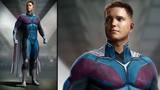


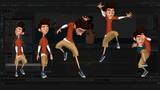











Learn how to create digi doubles for VFX production quickly and efficiently without sacrificing on quality using an industry-standard workflow. This 3-hour workshop by Pat Imrie is aimed at beginners without any experience creating a digital double, though the information included will also be helpful for seasoned professionals looking to expand their knowledge and update their workflow.
Pat’s goal with this workshop is to replicate as closely as possible what it would be like to work on a digi double task in a studio setting. Using scan data from Clear Angle Studios, a supplier of scan data for the film and TV industries, the workshop kicks off with a lesson about how to prepare the scan data in order to maximize how it can be used to create an asset at multiple levels of detail. He then explains in detail how to use Wrap by Faceformto match the base mesh to the scan data before exploring various techniques that can be used for quickly replicating the clothing using Maya and ZBrush.
Additionally, Pat walks through how to build a basic-pose rig to help repose the asset and looks at how to project and test texture maps to ensure the asset is properly prepared to pass on to other departments.
By completing this workshop, you will have gained a better understanding of the workflows used to create high-quality digi doubles and what their place is within a production pipeline.
The base mesh topology that Pat created specifically for this workshop is included as a Project File in .OBJ and .FBX formats
18 Lessons
Pat Imrie's first lesson establishes the foundation for creating VFX digidoubles by demonstrating a professional scan data preparation workflow. His careful attention to scale standardization, camera setup, and reference image linking ensures that the scan data will integrate smoothly into the production pipeline and allow for accurate detail work in subsequent stages. Learning how to properly prepare this data upfront will save significant time and maintain flexibility throughout the digidouble creation process.
Duration: 8m 10s

Preparing a base mesh for Wrap4D requires careful consideration of topology, UV layouts, and masking strategies. Pat explains why asset creation is a collaborative process and how artists must structure their work to support downstream departments, such as rigging and texturing. By creating properly named material masks for problematic areas (head, arms, interior geometry), artists can learn how to efficiently control the wrapping process and troubleshoot issues that commonly arise when fitting base meshes to scanned geometry.
Duration: 10m 38s

Pat's comprehensive scan preparation lesson ensures that 3D scan data is production-ready for any level of digital double creation without requiring additional processing time later. By maintaining multiple versions of the scan at different stages and organizing elements into separate components, artists can learn how to quickly adapt to changing production requirements while preserving the integrity and detail of the original scan data. His methodical approach has been proven to save significant time and provide flexibility throughout the VFX production pipeline.
Duration: 15m 5s

Pat's "digi in a day" workflow provides a practical approach to creating usable digital doubles under tight production deadlines. By strategically placing reference points, properly masking interior surfaces, and using cleanup tools such as the clone brush, artists can learn how to efficiently produce high-quality digi doubles suitable for background work, crowd simulation, and virtual production. The key lies in understanding where to focus attention (face, hands, feet) while maintaining efficiency through proper preparation and QC checks throughout the process.
Duration: 16m 45s

This lesson demonstrates Pat's efficient approach to creating background digi doubles that balances quality with production speed. By understanding the asset's specific use case, for example, background characters that won't be scrutinized closely, artists can learn how to make smart decisions about where to invest time and know when "good enough" is acceptable. His emphasis on maintaining point order, proper UV sets, and pipeline compatibility ensures these quickly produced assets will integrate seamlessly into studio workflows without causing technical issues downstream.
Duration: 10m 55s

The method showcased in this lesson provides a practical solution for converting scanned characters into rig-friendly poses when dedicated studio tools aren't available. While this creates a basic pose rig rather than a sophisticated animation rig, Pat's process effectively allows artists to quickly transition digi doubles between scan and A-poses, facilitating faster iterations between modeling and rigging departments. Understanding this fundamental workflow is valuable for troubleshooting and situations where automated tools are unavailable.
Duration: 15m 20s

The advanced workflow featured in this lesson demonstrates how to achieve camera-ready digital doubles, which requires meticulous attention to anatomical accuracy, particularly in areas visible in close-ups and during facial animation. By investing additional time in extensive point plotting, careful topology refinement, and anatomically correct edge loop placement, the resulting asset can serve multiple purposes, including face replacement and performance animation. Pat's strategic approach of creating a nude base character first, then adding clothing separately, provides maximum flexibility for various shot requirements.
Duration: 11m 26s

This lesson demonstrates a professional approach to converting 3D scans into production-ready assets by combining ZBrush's mesh optimization tools with Maya's precise retopology capabilities. Pat shows why clean, animation-friendly topology requires careful planning. His process involves starting with simple primitives, maintaining consistent edge flow and polygon density, and knowing when to stop adding detail. By creating lower-resolution retopologized meshes with proper UVs first, artists can later project high-resolution scan detail back onto them, achieving both the geometric cleanliness needed for animation and the visual fidelity of photogrammetry scans.
Duration: 30m 1s

This lesson demonstrates an industry-standard approach to creating production-ready digi-doubles that balance high-fidelity detail with animation efficiency. By projecting scan data onto optimized topology and exporting the details as maps, artists can learn how to maintain the realism of photogrammetry scans while working with lightweight, animation-friendly geometry. Pat's process requires patience and manual refinement, and the result is a character asset suitable for professional VFX production that can be further refined by texture and rigging artists downstream in the pipeline.
Duration: 18m 38s

Pat's quality-control workflow is essential for maintaining an efficient pipeline in production environments. By taking time to verify that displacement, color, and normal maps function correctly before passing assets downstream, artists can learn how to prevent costly delays and revision cycles. His systematic approach of setting up basic materials, test lighting, and performing sample renders allows artists to catch and fix technical issues early, ensuring that look development and texture artists receive clean, working assets that can be refined further for final shots.
Duration: 8m 15s

Pat teaches how to be strategic about asset resolution rather than defaulting to the highest quality possible. By carefully evaluating shot distance, context, and requirements, production teams can use appropriately-leveled LODs that balance visual quality with performance and efficiency. His thoughtful approach helps artists save time, reduce rendering costs, and keep scenes manageable while still delivering believable results in the final composite.
Duration: 3m 24s

Creating effective LODs for digital doubles requires balancing geometric detail with technical requirements, such as UV mapping. By using mesh smoothing and attribute transfer techniques, artists can learn how to maintain clean UV sets while incorporating high-fidelity scan data, resulting in models suitable for various shot distances. Pat's workflow provides flexibility for both distant and close-up cinematography while maintaining production efficiency.
Duration: 4m 49s

Refining a digi-double is an iterative process that requires careful attention to photographic references from multiple angles, while being mindful of potential visual discrepancies caused by varying lighting and shading conditions. Pat demonstrates that the goal is to produce a mesh that aligns well with reference photography across multiple viewpoints, which will be verified during the studio review process before moving to the next pipeline stage. His methodical approach ensures the digital character maintains photorealistic accuracy suitable for production use.
Duration: 6m 7s

Creating a meniscus in the eye is an important technique for achieving realistic results in character modeling. This relatively simple geometry addition eliminates the harsh, artificial line between the eyelid and eyeball by capturing specular highlights that mimic natural eye fluid. Pat explains why his workflow focuses on the modeling process and how the final look will be refined further by the texturing and look development departments.
Duration: 6m 23s

Creating high-resolution clothing for digital doubles requires a thoughtful balance between authenticity and efficiency. By modeling garments the way they're constructed in the real world, with accurate panel divisions, seams, and hardware, artists can learn how to achieve believable results that hold up under close scrutiny and dynamic simulations. The key is investing detail where it matters most while maintaining a practical workflow that can be passed down the production pipeline.
Duration: 5m 35s

Creating sim geometry is an essential workflow technique for efficiently animating and simulating high-resolution digital clothing and characters. By using simplified, optimized meshes as control cages through wrap deformers, artists can learn how to work with complex models without the performance overhead of manipulating dense geometry directly. Pat's approach provides a practical balance between visual quality and workflow efficiency in professional production environments.
Duration: 5m 24s

Proper asset preparation and organization are the critical final step in the modeling process that directly impacts the efficiency of downstream departments. By following studio-specific naming conventions, cleaning up temporary elements, and exporting appropriately posed versions, artists can learn how to ensure smooth handoffs between pipeline stages. While specific requirements vary between studios, the fundamental principle remains the same: organized, clearly labeled assets save time and prevent confusion throughout the production pipeline.
Duration: 1m 57s

Pat concludes his workshop with a recap of his comprehensive training on the specialized skill of creating digital doubles for the VFX industry. He explains why his focus on balancing efficiency, quality, and cross-departmental compatibility aligns with industry best practices for digital asset creation in professional film and television production.
Duration: 30s

Primary tools
For this workshop you’ll need:


* Note that these programs and materials will not be supplied with the course.
Project Files
This workshop provides artists with access to Pat Imrie's project files. By downloading the workshop files, you’ll find:
- 3D models (.fbx, .obj) – A ready-to-use base mesh that Pat created specifically for this workshop
- These project files have been provided by the instructor to make it easier to follow along with the workshop. –
Skills Covered
Who’s this Workshop for?
This workshop is designed for beginners with no prior experience creating digital doubles who want to learn industry-standard VFX workflows. Artists looking to break into character modeling, creature development, or VFX production will find this foundational training essential for understanding professional pipelines.
Seasoned professionals working in related fields will also benefit significantly from this comprehensive overview. Whether you're a modeler, rigger, or texture artist seeking to expand your skill set or update your current workflow with modern techniques, this workshop provides valuable insights into studio-standard digital double production methods.
Learning Outcomes
By completing this workshop, artists will have gained comprehensive knowledge of professional digital double creation workflows and their integration within VFX production pipelines.
Key skills include:
- How to prepare and optimize scan data for maximum efficiency across multiple detail levels.
- How to use Wrap by Faceform to accurately match base mesh topology to scan data.
- How to quickly replicate clothing and fabric elements using Maya and ZBrush techniques.
- How to build basic pose rigs for repositioning and testing digital double assets.
- How to project and validate texture maps to ensure proper asset preparation.
- How to integrate digital doubles effectively within studio production pipelines and departmental handoffs.


