
 Photoshop
 ZBrush
 Houdini
 Substance Painter
 Blender
 Unreal Engine
 Arnold
 Nuke
Nuke KeyShot
 V-Ray
V-Ray Marmoset Toolbag
 Mari
Mari Marvelous Designer
 Substance Designer
 3ds Max
 3DCoat
 Redshift
 Faceform Wrap
 Lightroom
 After Effects
 OctaneRender
 SpeedTree
 Daz 3D
 Agisoft Metashape
 Fusion
 Modo
Modo RealityCapture
 Gaea
Gaea Cinema 4D
 Gravity Sketch
 Premiere
 Procreate
 Clip Studio Paint
 SketchUp
 SketchBook
 Katana
 Natron
 Mudbox
 Quixel Bridge
 Quixel Megascans
 Quixel Mixer
 Substance 3D Modeler
 World Creator
 Yeti
Yeti Ziva VFX
 Mixamo
 Adobe Medium
 Quixel DDO
 xNormal
 Meshmixer
 Storyboard Pro
 DaVinci Resolve
 TreeIt
 World Machine
 Gaffer
 Corel Painter
 SynthEyes
 Krita
Krita Massive
 Materialize
 Unity
Unity Ornatrix
 PreForm
 Moi 3D
 animBot
 QuickTime
 ReCap
ReCap

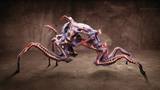



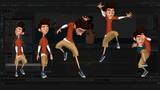


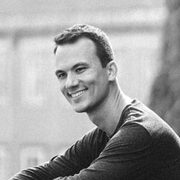







When it comes to rigging, a jaw rig can get complicated very quickly. Being able to rig a jaw that works for a variety of scenarios — and is rebuildable — is an essential skill in production. One that Arturo Coso, a Rigger on Love, Death & Robots, shares the secrets to in this 4.5-hour workshop for Maya using Python.
Taking a production-approved approach to rigging, Arturo details how to create a completely rebuildable jaw rig. While these types of rigs often require lots of objects and nodes, this is simply not efficient when done manually. Arturo’s approach shows how to create the rig using guides. You’ll follow along as he codes in Python, line by line, the jaw rig with an independent lip seal. The rig creation is divided into sections by methods, to make the learning process as easy as possible.
This workshop is taught so that you can follow along to create your own jaw rig for any 3D character model. The specific model used in this workshop is by the talented David Barrero and is available to purchase in his personal asset store.
11 Lessons
Arturo introduces his workshop, which presents a professional-grade jaw-rigging solution that prioritizes efficiency and robustness over traditional curve-based methods. His procedural approach creates a self-functioning system that only requires skinning the geometry as a final step, making it ideal for production environments. With its proven track record in feature films and advertising, Arturo's rigging technique provides animators with a reliable, precise tool for creating realistic jaw movements in character animation.
Duration: 2m 40s

This lesson shows an essential workflow for Maya Python developers who want to iterate on custom tools and scripts efficiently. By implementing this module-reloading system, developers can test code changes immediately without the time-consuming restart of Maya, significantly speeding up development and debugging.
Duration: 4m 31s

This lesson establishes the foundation for a professional facial-rigging system by creating a comprehensive guide structure. The emphasis on clean, modular Python code and rebuildable architecture demonstrates industry-standard practices for technical rigging. The system's flexibility allows rigging artists to easily adjust guide placement and quantities while maintaining organized hierarchies that will streamline the final rig creation process.
Duration: 32m 41s

In this lesson, Arturo establishes the foundation for an advanced facial-rigging system by creating a well-organized, three-tiered joint hierarchy that provides both broad control and fine detail manipulation. His emphasis on automation through Python scripting and sequential build processes ensures the rig can be reliably rebuilt and modified as needed. His systematic approach to joint creation and organization lays the foundation for more complex rigging features, such as seal behavior and advanced controls, which will be added in subsequent steps.
Duration: 38m 45s

This lesson demonstrates advanced rigging techniques for facial animation, specifically focusing on creating a robust lip rig system. Arturo's methodology emphasizes proper constraint hierarchies, automated part identification, and smooth interpolation systems that will allow animators to achieve realistic facial deformation. His systematic approach to organizing joint relationships and creating ordered lists will facilitate easier animation control and more natural lip movement in the final rig.
Duration: 32m 51s

This lesson sets the foundation for an advanced facial rigging system that uses mathematical interpolation rather than traditional curve-based deformation. The Seal transform approach provides precise control over jaw and lip movement while maintaining flexibility for different character configurations. The next steps will involve connecting the custom attributes to automate the constraint values and completing a sophisticated procedural-rigging solution.
Duration: 29m 42s

This lesson demonstrates an advanced approach to facial rigging that automates the complex process of setting up lip constraints and controls. By creating a systematic method for connecting joints, attributes, and constraint networks, Arturo provides a framework that generates smooth, controllable lip animation with minimal manual setup. Implementing automatic initial values via linear interpolation ensures animators start with natural-looking deformations that can be easily refined.
Duration: 32m 47s

This lesson demonstrates advanced rigging techniques for creating realistic facial automation in Maya. Arturo's combination of jaw automatism and lip sealing creates a sophisticated system in which jaw movement automatically drives lip behavior, with controllable parameters. While the initial jaw setup is straightforward, the lip seal system requires careful mathematical planning and node network organization to achieve convincing results across multiple joints with proper falloff controls.
Duration: 23m 31s

This lesson showcases the complexity involved in creating advanced rigging systems, particularly for facial animation. Arturo explains why this Seal system is one of the trickiest parts of the rig, requiring careful debugging and iteration to achieve the desired result. His methodical approach of testing in the script editor before implementing in the final Python code demonstrates good development practices for technical rigging work.
Duration: 42m 50s

Arturo presents a corner pin system that gives animators intuitive control over how mouth corners move during jaw movement and facial expressions. By automatically blending between upper and lower lip influences based on control positions, it eliminates the need for manual constraint weight adjustments while maintaining the flexibility to override the system when needed. His setup enhances the realism and efficiency of facial animation workflows.
Duration: 22m 40s

This final lesson demonstrates a professional approach to facial rigging that prioritizes flexibility and reusability. The rebuildable system allows rigging artists to adjust joint placement and rebuild the entire setup while preserving carefully crafted skinning data via export/import. Arturo's workflow significantly improves efficiency in production environments where facial rigs need to be iterated or adapted for multiple characters.
Duration: 23m 25s

Primary tools
For this workshop you’ll need:

* Note that these programs and materials will not be supplied with the course.
Project Files
When you download the project file provided with this workshop, you'll have access to:
- Maya scene file – A ready-to-open project file that can be used as an example or as a starting point for you to follow along with thr workshop
Skills Covered
Who’s this Workshop for?
This workshop is designed for intermediate to advanced riggers and technical artists working in Maya who want to master production-quality jaw rigging techniques. It's perfect for professionals seeking to enhance their Python scripting skills while creating efficient, rebuildable character rigs.
Character artists, animators, and pipeline TDs will also benefit significantly from understanding these advanced rigging concepts. The production-approved methodologies taught here will elevate any artist's technical skillset and improve their ability to create animator-friendly, robust facial rigs for professional projects.
Learning Outcomes
By completing this workshop, artists will have mastered the complete workflow for creating production-quality, rebuildable jaw rigs using Python automation in Maya.
Key skills include:
- How to structure rebuildable jaw rigs using guide-based systems for maximum efficiency.
- How to implement Python scripting for automated rig creation and complex node networks.
- How to create independent lip seal functionality within comprehensive jaw rig systems.
- How to organize rig creation workflows into manageable, method-based sections for scalability.
- How to apply production-approved rigging approaches that work across various character models.
- How to build animator-friendly controls that handle complex jaw movements and deformations.
- How to integrate efficient workflows that eliminate manual repetitive tasks in rigging.


